Tuesday, December 30, 2008

The canals that just had to exist on Mars

If you got money for Christmas, 10 Books That Screwed Up the World: and 5 Others That Didn't Help would be a good use of your dime. Therein, Ben Wiker, senior fellow at St. Paul Center for Biblical Theology, relates - among many other useful stories - the curious case of the canals on Mars.

Canals on Mars?

A number of prominent scientists, beginning in 1877 with Italian astronomer Giovanni Schiaparelli, were convinced that they saw through their telescopes an intricate system of canals on Mars. These canals were all very geometrical and hence obviously carried water for the great Martian civilization. The certainty of intelligent life on Mars was trumpeted (with the aid of businessman and amateur astronomer Percival Lowell). Books were published. Major newspapers declared the evident certainty to the astounded (and gullible) public. Helping to whip the public into a frenzy was alien enthusiast H. G. Wells, whose War of the Worlds seared into people's minds the dire fate that awaited Earth once the Martians stopped boating around their canals and launched their inevitable attack.

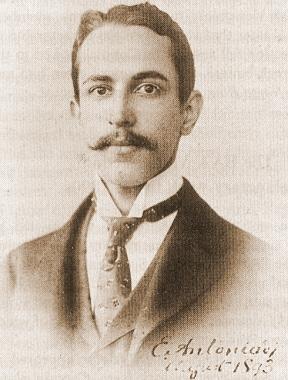
By 1930, this certainty was exploded by another astronomer,
E. M. Antoniadi, who pointed out that the "canals" weren't canals; they weren't nice geometrically drawn lines of precision traced on the surface of Mars, but just fuzzy shapes.

The lesson is simple enough. Schiaparelli, Lowell, Wells, and a host of other scientists and popularizers wanted to see life on Mars. The alien enthusiasts just wanted to see what was fuzzy as straight and geometrical because they wanted Mars to be populated with aliens. It is often our desire to have something be true that makes us clearly and distinctly see the false as true, the imagined as real. This is as true in the history of science as it is in our everyday life. In either case, reality is the appropriate test of our everyday beliefs and scientific theories. (pp. 25-26)
In describing this story, I would have used terms like "design inference" (in this case, no), inference to the best explanation, and following the evidence wherever it leads. Qualities absent from the Big (materialist) Science left over from the twentieth century.

Antoniadi was lucky, I suppose, to live when he did. He could have been a Guillermo Gonzalez, exiled to a Christian college for speaking the truth about Earth's location and qualities, in relation to the solar system. Remember that Gonzalez's key point is that Earth is an unusual planet, but the materialist agenda needs to show that there are zillions of Carl Sagan's "pale blue dots" out there.

And just now Call Display is asking me to accept a call from a planet orbiting the Alpha Centauri star system, from an alien who knows there is no mind or free will and thinks that everyone should be genetically planned and ... hey, wait a minute, buddy! Aren't you just a fundraiser for Ivy League U's? Get offa my line and get ME offa yer list!!! Sure, you people will go bankrupt before you smarten up, but you are just so not my problem!

See also: Alfred Russel Wallace on why Mars is not habitable

Saturday, December 27, 2008

Nuclear weapons: Certainties we are safer without

In "Atom John: A truck driver uncovers secrets about the first nuclear bombs," David Samuels introduces us to a truck driver who corrected the record on the first atom bombs (New Yorker, December 15, 2008):
Among other things, Coster-Mullen’s book makes clear that our belief in the secrecy of the bomb is a theological construct, adopted in no small part to shield ourselves from the idea that someone might use an atomic bomb against us. Surely, hostile powers could easily obtain the kind of information that Coster-Mullen has acquired, however painstakingly, in his spare time. Any nation that can master the challenges of the atomic-fuel cycle and produce a critical mass of uranium or plutonium, as Iran is reported to be on the verge of doing, would have little difficulty in producing a workable bomb. Given a sufficient quantity of highly enriched uranium, a small number of engineers working for a terrorist group like Al Qaeda or Hezbollah could easily assemble a homemade nuclear device.

I recently wrote to Coster-Mullen and suggested that we take a trip across the country to visit his Little Boy replica, which is currently housed at Wendover, a decommissioned Air Force base in Utah. After some negotiation, we agreed to ride together on his late-night delivery route between Waukesha and Chicago. We would then drive to Wendover. Along the way, he would explain the inner workings of the first atomic bombs, and I would learn how he got it right and the experts got it wrong.

[ ... ]

Coster-Mullen’s research project can be construed as a danger to mankind or as a useless antiquarian endeavor. Given that a functional atomic weapon can be constructed in myriad ways, why does it matter precisely how the first bomb worked? Yet Coster-Mullen is proud to have helped establish “a public, permanent record of the facts” about the Manhattan Project. As maddening as his personality can be, it is hard to imagine what America would look like without the small and shrinking number of people who engage in painstaking, firsthand research in order to separate the truth from the body of supposed facts, and who keep the rest of us honest. A corollary of this insight, of course, is that much of what we think we know is wrong.

Friday, December 26, 2008

International Society for the Philosophy of Chemistry - Call for papers

International Society for the Philosophy of Chemistry - Call for papers

Summer Symposium 2009

August 13-15, 2009

Chemical Heritage Foundation

Philadelphia, PA

The Chemical Heritage Foundation, the department of Philosophy, and the department of History and Sociology of Science at the University of Pennsylvania look forward to welcoming you to Philadelphia for the 13thsummer symposium of the ISPC.

*Call for Papers*

PDF Version http://www.phil.upenn.edu/~weisberg/cfp.pdf

Submissions are now invited for ISPC 09 on any topic in philosophy of chemistry. The organizers interpret the field broadly, and welcome papers from philosophers, scientists, historians, and educators. However, the paper should deal with a conceptual issue in chemical theory or practice, whether of historical or contemporary interest.


Please submit a short (50-100 words) and an extended (500-1000 words) abstract to Michael Weisberg (weisberg@phil.upenn.edu) by no later than March 2, 2009. Decisions will be made by the end of March, at which time online registration will be opened and lodging options will be made available.

To start life: Heat to 70 degrees Celsius, add dash of vinegar ...

In "Origin Of Life On Earth: Simple Fusion To Jump-start Evolution" (December 23, 2008) in Science Daily, we read,
Specifically, this study demonstrated how ancient RNA joined together to reach a biologically relevant length.

[ ... ]

The problem is that in the primordial world RNA molecules didn't have enzymes to catalyze this reaction, and while RNA growth can proceed naturally, the rate would be so slow the RNA could never get more than a few pieces long (for as nucleic bases attach to one end, they can also drop off the other).

Ernesto Di Mauro and colleagues examined if there was some mechanism to overcome this thermodynamic barrier, by incubating short RNA fragments in water of different temperatures and pH.

They found that under favorable conditions (acidic environment and temperature lower than 70 degrees Celsius), pieces ranging from 10-24 in length could naturally fuse into larger fragments, generally within 14 hours.
Apparently, at about 100, the chain can start folding into functional shapes.

This scenario, assuming it contributes valuable information, makes specific assumptions: "acidic environment and temperature lower than 70 degrees Celsius". Now note what follows: Any scenario that requires higher temperatures or a different environment must be incorrect.

One problem with origin of life research is that it does not seem like a growing body of information; it seems more like a disorderly pantheon of powerful individual ideas that do not usually connect.

Over at Uncommon Descent Gil Dodgen identifies the critical origin of life problem:
The origin-of-information problem ... is ignored in all hypotheses for an obvious reason. It is insoluble in materialistic terms.
Another friend writes
I fail to understand how people who are presumably smart enough to have got a PhD in a science do not realize that the overwhelming problem in the origin of life is generating the necessary information. For the generation of RNA or DNA molecules that will produce a living organism from which evolution can take over, the big problem is not the chemistry, nor the fabrication of big molecules, nor the synthesizing of RNA building blocks. It's putting those building blocks together in such a way that it encodes all the necessary life functions, including metabolism and reproduction, to say nothing of generating the information necessary to read and interpret the information in those information-bearing molecules.
Generally, origin of life scenarios focus on the random roduction of mechanisms that might embody information - somewhat like a random evolution of computers that ignores the minor detail of software algorithms.

See also:

Origin of life: A meatier theory? Or just another theory?

Origin of life: There must be life out there vs. there can't be life out there

Origin of life: Oldest Earth rocks may show signs of life, in which case ...

Origin of life: Positive evidence of intelligent design?

Origin of life: But is being greedy enough?

Origin of life: Ah, that "just so happens" intermediate series of chemical steps

Why should the search for Darwin's "warm little puddle" be publicly funded?

Friday, December 19, 2008

Astronomer vs. pop science TV

Here's my review of Hugh Ross's Why the Universe Is the Way It Is (Baker, 2008). It was originally written for a Christian news magazine but, due to a mixup, someone else had published a review first. So I thought I may as well put it up here. Also, below the review, I have placed some selections from the book in earlier posts put up here:

Canadian-born astronomer Hugh Ross reminds us that Stephen Hawking said, in his all time science bestseller A Brief History of Time: “It would be very difficult to explain why the universe should have begun in just this way, except as the act of a God who intended to create beings like us.”

But Hawking, along with a great many other cosmologists, then devoted his career to attempting to explain it all away. The resulting efforts—including speculations about hypothetical other universes—are widely reported, not because they are very convincing but because their anti-theistic assumptions are part and parcel of the current understanding of science.

Ross begs to differ. His book consists of two parts: Why does the universe show the puzzling features that it does, and how can we integrate a Biblical explanation with a scientific one? He recounts that he became a Christian as a young adult after a skeptical study of the Bible (and other “holy books”) convinced him that “no human mind or collection of minds alone could have produced the sixty-six books of the Bible. These books contained information their writers couldn’t have known and concepts they couldn’t have begun to imagine apart from supernatural inspiration.” Now this is a daring claim, one I will leave to scholars. At any rate, the experience started him on the path to founding Reasons to Believe, a Pasadena, California-based ministry aimed at scientists, based largely on insights from astronomy, physics, and more recently, biology.

Ross patiently explains why the universe is so big and so old—because life as we know it could not otherwise exist. Of course, a skeptic might reply that God could have ordained things differently. But the skeptic is never asked to explain how, exactly; skepticism is apparently a full time job. Curiously, Earth is also in the darkest location in the galaxy and therefore the best for observing the heavens). Ross joins many theistic astronomers in taking this as a sign that humans were meant to explore the universe.

So far so good. But then, in the latter half of the book, Ross turns to the Scriptures and I become uneasy. Let me begin by positioning myself as far as possible from one popular brand of “theistic evolution,” according to which evidence for God in nature is suspect “because one day science might find a reason for all that, and then what will become of your faith?”

Let me be clear: Science has found a reason for fine tuning: It is necessary for life. Further delving into the universe is likely to uncover still more such evidence. Fine tuning is also precisely what the Scriptures tell us to expect when they constantly praise God’s “handiwork.” The only alternatives are to say that human reason is meaningless or that there might be a zillion flopped universes out there (and many pundits do say these things). But these alternatives do not recommend themselves easily to a reasoning mind.

My uneasiness stems from the fact that Ross, taking a literalist approach to Scripture, tries to understand subjects like the New Jerusalem in terms of physics. It’s interesting, yes, but alarmingly trite. I think that Paul’s approach— "No eye has seen, no ear has heard, no mind has conceived what God has prepared for those who love him” (1 Cor 2:9 NIV)—is wiser in the long run. Paul and other Christian mystics usually cannot describe authentic visions of the world to come, as I learned while working on The Spiritual Brain. (See especially 2 Cor 12:2-4, where Paul makes that explicit.)

It’s not a question of preferring faith to science. We simply cannot speak intelligibly of the world to come, even if we are sure that it exists, for the same reasons that we cannot speak intelligibly of an eleven-dimensional structure, even if we are sure that it exists. We do not have language for it.

Those cautions aside, Why the Universe Is the Way It Is is a must-read for intelligent Christians and an excellent antidote to the “lost in the universe” nonsense that dominates pop science TV.

Some selections of interest from the book:

Why some self-proclaimed skeptics need a universal swivel joint in their necks ...

The nothingness of nothing as seen by scientists

Does our solar system occupy a unique position in the universe or just an ordinary one?

Extraterrestrials: Several million UFO reports later, the state of the question

Coffee break: From Dolly the embraceable ewe to a fully downloadable you?

Jason Rennie (whose science fiction and philosophy blog I have just added to the blogroll) offers
This weeks installment of Sci Phi Journal is the wonderful story, You Pretty Thing by Australian Author Lee Battersby. It is read by Rick Stringer of the variant Frequencies Podcast. I hope you like it.
The basic thesis is that a man has developed a plan to cheat death:
“This,” he said, indicating his body. “A clone, created from genetically manipulated junk stock. Download myself into it via a brain transplant at the point of death.”

“The cancer?”

“Not in my brain.” He tapped the side of his head. “All my memories, all my experiences. I’m me. The body is just a vessel.”

“Except?”

“Except I have to prove it. Beyond reasonable doubt.”
The questions you are invited to discuss in the comments are
I Do you think Rhodes has managed to achieve immortality ?

II Is this really still Jonathan Rhodes ?

III Does the test prove that ?
The story is available in available in a variety of sound, text, and palm reader formats.

Thursday, December 18, 2008

Origin of life: Alien origin taken seriously? Ghost of Francis Crick smiles wanly

According to Matthew Hutson at Popular Mechanics, "5 Projects Ask if Life on Earth Began as Alien Life in Space" (December 16, 2008):

For years, scientists have considered the possibility of exogenesis, the idea that life arrived on Earth from another planet, and not just the building blocks of life, but organisms that were ready to rock and roll when they arrived. It’s a Rube Goldberg scenario, however, dependent on several successful steps. First, life has to evolve on an alien planet. Then it must be blasted into space on a rock, probably from a large impact. Assuming it survives a long journey through harsh conditions—and makes its way into our neighborhood—life then has to resist fiery atmospheric entry and a brutal landing before trying to make a new home for itself.
Five projects. I wonder if the ghost of Francis Crick is their patron saint? (The double helix guy believed, controversially, that life must have come from outer space.)

See also:

Origin of life: A meatier theory? Or just another theory?

Origin of life: There must be life out there vs. there can't be life out there

Origin of life: Oldest Earth rocks may show signs of life, in which case ...

Origin of life: Positive evidence of intelligent design?

Origin of life: But is being greedy enough?

Origin of life: Ah, that "just so happens" intermediate series of chemical steps

Why should the search for Darwin's "warm little puddle" be publicly funded?

(Note: The image of Crick is from Wikimedia Commons.)