Tuesday, September 30, 2008

Origin of life: Oldest Earth rocks may show signs of life, in which case, ...

In "Team finds Earth's 'oldest rocks'" (BBC News, September 26, 2008) James Morgan reports:

Writing in Science journal, a team reports finding that a sample of Nuvvuagittuq greenstone is 250 million years older than any rocks known.

It may even hold evidence of activity by ancient life forms.
Geologist Don Francis and graduate student Jonathan O'Neil of McGill University in Montreal have found an ancient greenstone ("faux amphibolite") which may be the oldest rock known.

The rock was dated to between 3.8 and 4.28 billion years ago. "4.28 billion is the figure I favour," says Francis. It is not surprising that he favours the latter date, since it would make his find about 250 million years older than the second oldest one, the Acasta Gneiss in Canada's Northwest Territories, dated at 4.03 billion years old.

But now what's this about life? Well, honestly, right now, it's mostly imagination. The greenstone shows a banded iron formation of magnetite and quartz also found in rock around deep sea hydrothermal vents. Many think that these vents hosted early life on earth.
"These ribbons could imply that 4.3 billion years ago, Earth had an ocean, with hydrothermal circulation," said Francis.

"Now, some people believe that to make precipitation work, you also need bacteria.

"If that were true, then this would be the oldest evidence of life.

"But if I were to say that, people would yell and scream and say that there is no hard evidence."
O'Neil adds,
We know that probably the right environment was there for life to be on the Earth -- so liquid water and all it takes to have life. Now was there life? This is a big question mark"
Actually, the geologists are probably safe. People are pretty open to speculation around the origin of life. But let us say that their wildest dreams come true an they do find hard evidence of life in these rocks. In that case, life started on Earth almost immediately after the planet cooled (in geological terms, that is). If so, then life clearly did not originate via a long slow random swish of chemicals, as we have been encouraged to believe.

Francis and O'Neil had been looking for clues on the eastern shore of Hudson Bay in northern Quebec about the Earth's mantle from 3.8 billion years ago when they found the outcrop of the Nuvvuagittuq greenstone belt. It was dated at the Carnegie Institution of Washington by measuring the isotopes of neodymium and samarium, rare elements that decay at a known rate.

Here are some other "oldest rocks" stories, and some photos put up by Professor Francis.

See also

Origin of life: Positive evidence of intelligent design?

Origin of life: But is being greedy enough?

Origin of life: Ah, that "just so happens" intermediate series of chemical steps

Why should the search for Darwin's "warm little puddle" be publicly funded?

Galactic habitable zone not unique, computer sim suggests


A new theory, based on computer simulations, questions whether life-bearing planets really need a galactic habitable zone (GHZ) such as the one Earth occupies (a zone that protects the planet from the usual harshness of space).

Modelling the idea that our sun might be an "immigrant star" from another part of the galaxy, Rok Roskar of the University of Washington and colleagues argue,

"Our view of the extent of the habitable zone is based in part on the idea that certain chemical elements necessary for life are available in some parts of a galaxy's disk but not others," said Rok Roskar, a doctoral student in astronomy at the University of Washington.

"If stars migrate, then that zone can't be a stationary place."

If the idea of habitable zone doesn't hold up, it would change scientists' understanding of just where, and how, life could evolve in a galaxy, he said.
However, they qualify,

"Our simulated galaxy is very idealized in the formation of the disk, but we believe it is indicative of the formation of a Milky Way-type of galaxy," he said. "In a way, studying the Milky Way is the hardest thing to do because we're inside it and we can't see it all. We can't say for sure that the sun had this type of migration."
In other words, under ideal conditions, there might be more than one type of galactic habitable zone.

Or else perhaps the zone should be thought of as a checklist of necessary conditions rather than a specific place ...

See also:

Does our solar system occupy a unique position in the universe or just an ordinary one?

Rare? Solar systems like ours are rare?

Astronomer argues that we can test whether Earth is fine-tuned as a science lab"

Serious push to find more exoplanets

Exoplanets: Will intelligence be common or rare?

Note: The image is from NASA, and is an artist's conception of the Milky Way.

Monday, September 29, 2008

Hail, ceaseless complexity? Or maybe Fail, ceaseless complexity?

In "Hail, ceaseless complexity, (Philadephia Enquirer, Sep. 28, 2008), Henry Gee, senior editor of Nature Magazine, mocks reviews Stuart Kauffman's Reinventing the Sacred (Basic Books, May 2008), an effort to make complexity theory supplement the information gaps in the origin of life. Gee writes,
Kauffman's reasoning is, in the main, faultless. It falls down, however, in two places. The first is his proposal that consciousness is based on the quantum mechanical properties of cellular substructures. Some recent work does show that certain proteins, in the dense milieu of cells, can manipulate electrons Santa-fashion, keeping all quantum possibilities open for as long as possible.

This idea is fascinating, but Kauffman appears to speak as if such properties were confined to neurons in the brain. Nowhere does he explain why they should not exist in other kinds of cell - a flaw that exposes him to accusations of arguing that brain cells are somehow exceptional. By the same token, he dismisses, out of hand, the idea that "mind" might be an emergent property of the trillion-fold interconnectedness of billions of neurons - a casual swipe that goes against everything else he says in the book about complex systems.

The second failure is the whole God business. The concluding chapters are more readable than the rest (in a book that is often an eye-watering challenge to read), but they degenerate into a repetitive mantra in which Kauffman says that the "ceaseless complexity" of the world, while not being evidence for a Creator God, should somehow be "symbolic" of God, or, at least, of something "sacred." He cannot prove this logically, he says; he can only try to persuade us.

This appeal to a kind of primitive pantheism is both sincere and charming, but in the end it is simply more special pleading. The fact is that in Kauffman's scheme, God is unnecessary, even if reductionism fails, so in the end one wonders about the point of preserving a sense of God.
Gee's review makes clear that one cannot be a half-hearted materialist, as Kauffman and all his followers want to be. If you really believe in the materialist magic of self-organizing complexity, then you do not believe in God, or for that matter, in the mind or free will.

Henry Gee's review makes that clear, though it fails to elucidate Kauffman's theory in any detail. (But in fairness, I could not do it either.)

Here's the book: Reinventing the Sacred (Basic Books, May 2008)

See also: Now, if all those the butterflies would just appear out of nowhere. ...


Time is the only true mystery?

A friend sends me this, a new clock developed by John Taylor - not a computer gneraton but a true mechanical clock, that offers a different way of showing time. My friend says that it demonstrates that time time is the only true mystery:


See also: Do you have time to hear about some new theories of time?

Like clouds in our coffee ... all these other universes ...

In Darwinian Universes And Colliding Branes: Eschewing A Cosmic Singularity, Access Research Network correspondent Robert Deyes comments on cosmologist Lee Smolin's "Darwinian universe" theory:
Cosmologist Lee Smolin has developed his own Multiverse theory conjecturing that within the confines of black holes, there might be other universes forming and expanding just like our own that would never be visible to us because of the limited horizon of black holes (their gravitational pull is so strong that even visible light cannot escape) (Ref 4). Smolin's ideas would certainly make good science fiction. Universes that originate from explosions that are hidden from sight in black holes make a backdrop for a great story in which intelligent beings such as us are oblivious to the origin of their cosmos, believing it to be in some way unique (Ref 4, p.89). With so many universes spawning from black holes, Smolin argues, it becomes more probable that at least one of them will have laws of physics that are fine-tuned for the formation of stars, planetary systems and eventually life. Or does it?

Smolin's idea of universe progeny spawning from black holes within parent universes bears striking similarities to the evolutionary tree of common descent that Darwin provided as the sole picture in 'The Origin Of Species'. According to Smolin, as universes 'improve' their ability to generate more stars and thereby produce more black holes, 'fitter' universes will swamp out those that are less finely tuned, have fewer stars and therefore produce less progeny (Ref 4, p.90-100). Given time, enough universes will have produced enough stars to generate enough black holes to produce more progeny universes with life-supporting, physical parameters such as our own.

But what is to say that fine-tuning will necessarily improve to the phenomenal level that we find in the laws of physics that under gird our own cosmos? Smolin's theory relies on the early parent universe going through expansion-collapse cycles before it becomes 'fit' enough to produce stars and consequently black holes for its progeny to form (Ref 4, p.97). For such a cosmos, the mechanical energy needed for expansion-collapse would eventually decay just as a ball bouncing on a living room floor would eventually stop bouncing. Such observations are consistent with the second law of thermodynamics. So for Smolin's parent universes to generate progeny, they would have to get fit before the bouncing energy ran out.

Oddly enough Smolin's theory also suffers from a lack of testability and falsifiability. We have no way of testing whether or not a host of universes and other worlds actually exist behind black holes.

About all that, I said, in By Design or by Chance?:
All these universes popping up in the clouds in our coffee, in the torment of a black hole, in the futility of an escaped balloon—their existence guarantees that our universe is a product of chance. If only they would exist . . . if only they would exist . . .

See also: Major media, imagining themselves sober, think there are many universes, not just double vision.

The Big Bang exploded; seriously, is there room for reasonable skepticism about the Big Bang?

Could God live in an infinite sea of universes? It depends.

Will thecosmic multiverse landscape ensure the triumph of intelligent design?

Now, remind me again why we need multiverse theory in the first place?

Multiverse theory: Replacing the big fix with the sure thing?

Mathematics: 46th Mersenne prime number found

The 46th known Mersenne prime number has been found. It is 13 million digits long. How large is that? According to Julie Rehmeyer at Science News (September 28, 2008), its size is mind-boggling:
With nearly 13 million digits, it makes the number of atoms in the known universe seem negligible, a mere 80 digits.
So we are here in the realm of numbers much bigger than the real world.

Note: Prime number = numbers like three, seven, 11, 29, and 31, which can be divided only by two whole positive numbers: themselves and one. Primes are common in the first few hundred digits of natural numbers, but get rarer the higher you go. In the very large numbers, there are vast "prime deserts" where finding another one may take years even with modern computing equipment. The UCLA team has discovered 8 Mersenne primes, using spare computing power.

Mersenne primes, as noted on Fox News (and elsewhere), are named after their discoverer, 17th century French mathematician Marin Mersenne. They
... are expressed as 2P-1, or two to the power of "P" minus one. P is itself a prime number. For the new prime, P is 43,112,609.
This method of expressing the number means that it does not need to be written out. Mersenne primes are the easiest type to find using computing power, though they tend to be quite large.

Here is the "Great Internet Prime Search's" (prime searchers') news page, where they explain how they will divide the $100 000 prize that the Electronic Frontier Foundation is giving them for their find.

Here's a lot more about primes.

See also:

Morning coffee: Mathematicians vs. physicists

Universe shaped like a nautilus shell on a large scale, it seems

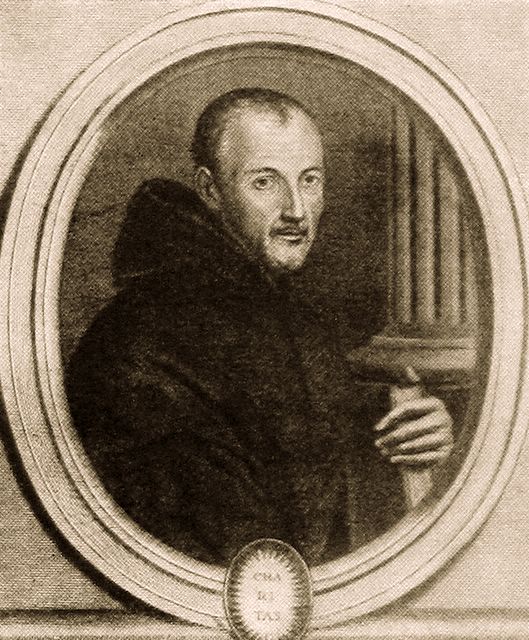
(Note: The image is of Pere Marin Mersenne from the Laboratoire Marin Mersenne. )

Thursday, September 18, 2008

Origin of life: Positive evidence of intelligent design?

In The Design Matrix: A Consilience of Clues, the pseudonymous Mike Gene comments,
The fact that DNA contains encoded information in the form of a one-dimensional linear string of symbols is very suggestive positive evidence for Intelligent Design behind the fabric of life. If we set aside life for the moment, then every other example of a sequence of characters representing convention is because of Intelligent Design. If a sequence of dots and dashes, or zeroes and ones, or scribbles, encodes something, we rationally infer an intelligent cause ultimately behind the existence of that sequence. In fact, this is often perceived as a working assumption behind SETI, the Search for Extra-terrestrial Intelligence. To detect intelligence, SETI might eventually find a sequence of signals that appears to encode something, In striking contrast, geologists do not look for a sequence of characters that encode the formation of mountains or cause volcanoes to erupt. Nor do meteorologists look for a sequence of characters that encode the formation of rain or hurricanes. Nor do chemists look for a sequence of characters that encode the formation of crystals or gases. If every other example of encoded information points to Intelligent Design, and encoded information in science is specific to life, it is reasonable to follow this lead and make the same tentative inference for the ultimate origin of genetic information and life itself.
The alternative theory is that the genetic code is a "frozen accident" - it just happened and then it got stuck that way through self-replication because living things came to depend on it.

It is remarkable to live in a time when many otherwise intelligent people are seriously willing to entertain such an idea.